
Last updated November 20, 2026
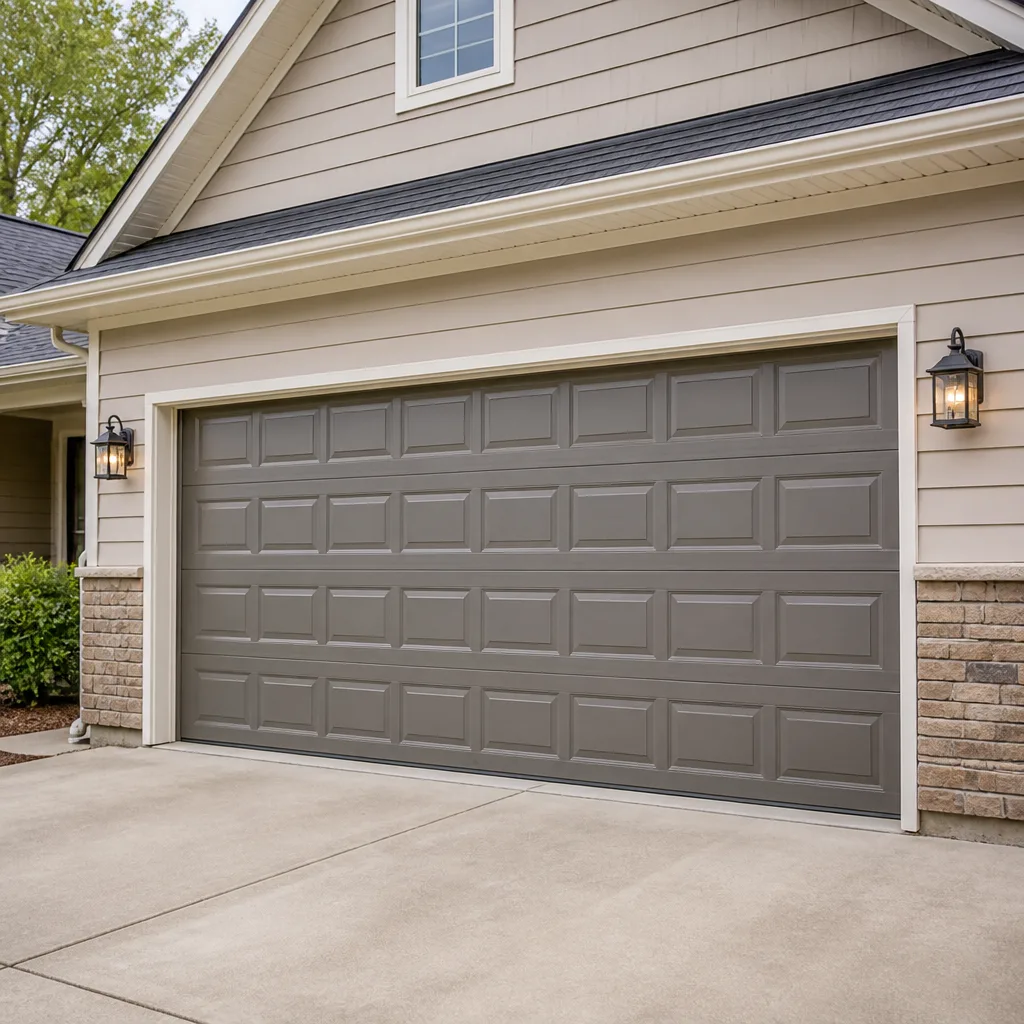 Raised-panel steel
 Carriage house
 Modern flush
 Full-view glass
 LiftMaster openers
 Chamberlain openers
Full 25-point door and opener safety check with every visit - springs, cables, rollers, tracks, and your LiftMaster or Chamberlain opener included
You get a price before we start. It does not change when the pro arrives.
Get your free estimateGarage Door Warning Signs: A Bedford Park Homeowner’s Reference Guide
That grinding sound your door makes on cold mornings isn’t “just the weather” – it’s a specific component telling you exactly what’s about to break. Most garage doors don’t fail without warning. They telegraph trouble through sounds, speeds, and behaviors that homeowners have learned to tune out, then one morning the door won’t open and the whole household schedule falls apart. In Bedford Park, where older housing stock and tight driveways make a jammed door especially inconvenient, reading those signals early saves money and stress. This guide decodes the warning signs component by component, separates the ones that give you a few weeks from the ones that mean stop using the door today, and shows you how to describe what you’re hearing so a technician can quote you accurately before anyone arrives.
Quick Answer
Common garage door warning signs include grinding or squealing noises, jerky or uneven movement, a door that reverses unexpectedly, visible cable slack, an uneven gap at the floor, and rust streaks on the springs. In Bedford Park, any sound that grows worse over a week, or any door that hesitates or reverses on its own, deserves a professional look before it fails completely – and a snapped spring or loose cable means stop using the door immediately.
Styles & brands we work with
- Raised-panel steel
- Carriage house
- Modern flush
- Full-view glass
- LiftMaster openers
- Chamberlain openers
Table of Contents
- Sound-Based Diagnostic Index
- What Speed and Movement Irregularities Tell You
- Visual Signals Homeowners Overlook
- A Few Weeks or Stop Today? Sorting the Signs
- Why Bedford Park Mornings Are Hard on Your Door
- How to Describe Warning Signs Over the Phone
- Brand-Specific Signals: What to Expect
- A Simple Monthly Check Routine
Sound-Based Diagnostic Index: What Each Noise Means
A garage door produces a small vocabulary of sounds, and each one points to a different part of the system. Learning to hear the difference between a squeal and a pop lets you tell a technician something useful instead of “a weird noise.” Here’s how we map the sounds our technicians hear in Bedford Park every week.
- Grinding: Metal-on-metal contact, usually a worn roller or a dry hinge. If it’s coming from the top of the track, the door may be riding at an angle and scraping the rail. Grinding that appears only on cold mornings often signals a roller on its way out.
- Squealing: Usually a dry torsion spring or a hinge with no lubricant left. A high, continuous squeal that follows the door the whole way up points to friction in the moving parts; a brief squeal at the start only can mean a spring that’s binding.
- Popping: A sharp pop or bang, especially from the spring area above the door, means a spring is winding or unwinding under stress. A single loud pop is often a spring breaking. Treat popping as a red flag, not background noise.
- Rattling or clunking: Loose bolts, worn rollers, or a door that has come slightly out of alignment. Rattling is usually the least urgent sound, but it can indicate a loose track bolt working its way out.
- Scraping: The door panel dragging on the frame or floor. Often a sign of a bent track or a hinge that’s come loose.
Two rules of thumb for Bedford Park homes: a sound that’s new deserves attention, and a sound that’s getting louder deserves a call before the door fails. Our technicians have up to 11 years of experience listening for exactly these distinctions, and trained ears pick up on the difference between a squeal that’s just dry and a squeal masking a worn bearing. If a noise has been around for months and hasn’t changed, that’s often less urgent than a noise that appeared last week.
What Speed and Movement Irregularities Tell You
Your door has a normal rhythm. It rises at a steady pace, reverses at a consistent point, and glides back down without hesitation. When that rhythm breaks, the door is communicating something about the components that control it. Here are the movement signals we watch for, and what each one suggests.
- A door that hesitates mid-travel: The opener is straining, often because a spring has lost tension or a roller is binding. A hesitation that shows up only on the way up usually points to spring tension; a hesitation on the way down points to a track or roller problem.
- A door that reverses unexpectedly: Modern openers with safety sensors will reverse if they detect an obstruction. If nothing is in the way and the door still reverses, the sensors may be misaligned or the opener’s travel limit needs adjusting. See our guide to garage door opener repair for what this usually involves.
- A door that moves unevenly side to side: One side rising faster than the other means the door is fighting a bent track, a broken cable, or uneven spring tension. This is one to stop using – going up at an angle can stress the panels and the opener itself.
- A door that slams or drops too fast on the way down: The springs aren’t holding the door’s weight, so the opener motor is doing all the lifting. This is where a rebuilt spring or a new set becomes necessary, not optional.
- A door that moves slowly or stops partway: The opener is working harder than it should, usually because the door is heavy. A door that used to open in the usual time and now creeps is a candidate for spring evaluation.
Movement problems in Bedford Park tend to show up together with sound problems – the door grinds and hesitates, or squeals and drops too fast. When that happens, the issue is usually in the mechanical side of the door, not the opener. Calling a specialist who can look at both saves you from paying for a repair that fixes the symptom and misses the cause.
Visual Signals Homeowners Overlook
Some of the most reliable warning signs are the ones you can see, but only if you know where to look. Take a minute every month or so to run your eyes over the parts of the door you normally walk straight past.
- Slack in the cables: The two cables that run down each side of the door should be under tension. If one hangs slightly loose or looks kinked, stop using the door and call a technician. A loose cable can jump its drum and cause the door to drop.
- An uneven gap at the floor: The rubber seal at the bottom should sit flat on the concrete all the way across. A gap on one side, or a gap that opens when the door is closed, means the door is out of level or a hinge has shifted. Uneven gaps let in water and pests, and they let heat out.
- Rust streaks or powder on the springs: Rust on the torsion springs above the door is a sound predictor of failure. A spring that’s starting to rust through can snap without warning, and a spring that’s already rusty has lost some of its strength. Look for orange-brown streaks or a fine rust dust on the coils.
- Bent or bowed panels: Small bows in a panel suggest the door has been hit at some point, or the door is being pulled unevenly. Bowed panels put extra load on the hinges and springs.
- Worn or cracked rollers: Rollers that look flat on one side, or that have cracks in the nylon, are on their way out. Worn rollers produce grinding sounds and make the door harder to lift.
- Loose hinges and bolts: A quick visual check of the hinges along the sides and the bolts holding the track will usually turn up one or two loose fasteners on a door that’s been rattling.
In Bedford Park, the visual signals that matter most are the ones connected to the springs and cables, because those are the parts that carry tension. Our team specializes in spring repair, so we spend a lot of time looking at the exact spots you’d gloss over. When a spring is visibly rusting and the door is getting heavier, the smart move is to book a garage door repair visit before the spring lets go.
A Few Weeks or Stop Today? Sorting the Signs
Not every warning sign is an emergency. Some give you room to schedule a repair at a time that suits you, and others mean you shouldn’t open the door again until someone has looked at it. Here’s how we sort them.
- Stop using the door today: A snapped spring, a cable that’s jumped its drum, a door that’s off its track, or a door that moves visibly unevenly side to side. These are the signs that put people and property at risk. Leave the door closed and call for emergency service.
- Schedule a repair within a week or two: Grinding or squealing that’s getting worse, a door that hesitates, a door that reverses on its own, or a visible gap at the floor that’s recently appeared. These give you a little time, but they don’t fix themselves.
- Schedule a repair at your convenience: A loose hinge, a single rattling bolt, a worn roller you’ve spotted on inspection, or light surface rust that hasn’t reached the coil. These are the honest “get around to it” jobs, and booking them early keeps them from turning into a same-day emergency.
For a spring that’s visibly rusty and starting to weaken, treat it as a stop-today even if it hasn’t snapped yet. Springs fail suddenly and without warning, and a weakened spring is a loaded part. The safety rule here is simple: don’t try to adjust a torsion spring yourself. The springs above your door are under enormous tension and require trained hands and the right tools. What you can do is note what you’re hearing and seeing, then call. For a same-day visit, call Garage Door Repair Bedford Park. We answer 24/7 and run fast dispatch from 7am to 7pm, Sunday through Friday.
Why Bedford Park Mornings Are Hard on Your Door
Cold weather tightens every piece of metal in your garage door system at once. The springs above the door become stiffer, the grease in the rollers thickens, the tracks contract slightly, and the wood or steel panels of older doors can warp a fraction of an inch. That combination is why a noise that was a faint squeak in summer turns into a grinding complaint in January. In Bedford Park, where garages often sit under an apartment building or connect to a narrow shared driveway, that winter stiffness shows up as a door that struggles at the worst possible time – the morning commute.
The first cold snap of the season is the moment to listen. If your door starts its day with a squeal or a grind and clears up after a few cycles, that’s a friction signal you can get ahead of. A technician can lubricate the correct points, check the rollers, and look at the spring tension before the coldest weeks arrive. If your door makes noise all the way through its travel, that’s a component problem, not a weather problem. A door that’s been fine through the summer and suddenly hesitates when the temperature drops is a classic Bedford Park pattern, and it’s usually a spring that’s aging out or a roller that’s gone dry.
Summers here can be humid, and that affects the metal as well. Rust on the springs is often the winter complaint waiting to happen. If you see rust streaks or a fine dust around the coils, get it looked at before the cold returns. Timing a repair around the season is one of the simplest things a homeowner can do, and it’s the difference between a scheduled visit and a stuck door on the coldest morning of the year.
How to Describe Warning Signs Over the Phone
An accurate phone description is what lets a technician bring the right parts and give you a realistic estimate. “A weird noise” doesn’t help anyone. What does help is a short briefing in five parts:
- The sound and when it happens: “Grinding from the top of the door, only on the way up,” is far more useful than “it sounds bad.” Note whether it starts at the beginning, middle, or end of the cycle.
- The timing: Did it start last week or last year? Has it gotten worse? A sound that started three days ago is a different call than one that’s been there for months.
- The movement: Does the door hesitate, reverse, move unevenly, or drop too fast? Each of these points to a different part.
- The visible state: Mention the brand of the opener or door if you can see it, whether you’ve seen rust or slack in the cables, and whether the gap at the floor is even.
- The model info: If you have the manual or can read the label on the opener, pass along the make and model. Our technicians are trained on LiftMaster, Chamberlain, and Genie openers, plus doors from Clopay and other major lines, and knowing the brand helps them know the system before they arrive.
One practical tip from our side of the phone: take a photo or a short video of the door in motion before you call. Ten seconds of video often tells a technician more than a paragraph of description, and it lets them price the job more accurately. This is how we give a realistic estimate before anyone arrives. For an update on a door other than the one you’re calling about – maybe a second garage you’re planning to update – a professional can talk you through the options, including a full garage door installation if replacement turns out to make more sense than repair.
Brand-Specific Signals: What to Expect
Different openers and different doors fail in their own ways, and a technician who knows the brand is not guessing. The signals to watch for shift depending on what’s on your ceiling and what’s on your tracks. In Bedford Park, the mix of older and newer homes means we see a wide range of makes and models in a single neighborhood, and the brand on the label tells us a lot about what to check first.
- LiftMaster and Chamberlain: Both use similar drive designs and safety-sensor logic. Common signals are reversing on descent, a light that flashes instead of opening, and hesitation on lift. The brand-specific point is the travel-limit and force settings, which need to be adjusted correctly, not just bumped up.
- Genie: Older Genie units often show their age through a weaker up-force as the springs lose tension. A Genie opener that needs help getting the door started is more often a spring problem than an opener problem.
- Clopay doors: Clopay installs across a range of panel styles and weights. Heavier steel panels show up as a door that drops too fast, and lighter insulated panels can develop uneven gaps if the hinges loosen.
- Other major brands: Craftsman, Amarr, Wayne Dalton, and Raynor all have their own track and panel designs, and the diagnostic path differs. If you’re not sure of the brand, the model sticker on the opener and the manufacturer’s mark on the door panels will tell a technician what they need to know.
The practical upshot for a homeowner: don’t assume “they all work the same way.” A technician who services the brand on your door already knows the likely failure points, which saves time and parts. It also means a diagnosis that fits your system instead of a generic adjustment.
A Simple Monthly Check Routine
Five minutes once a month is enough to catch most of the warning signs in this guide while they’re still small. Here’s what we suggest for a Bedford Park homeowner who wants to stay ahead of the door:
- Listen: Open and close the door and pay attention to the sound. Compare it to how it sounded last month.
- Look at the springs: Check the coils above the door for rust, dust, or a visible gap. Don’t touch them.
- Check the floor gap: Close the door and look along the bottom seal. An even gap all the way across is good; a gap on one side is a signal.
- Watch the movement: Does the door go up and down evenly, or does one side lag? A door that moves evenly is a door that’s tracking well.
- Test the safety sensors: With the door open, wave an object across the sensor beam near the floor. The door should refuse to close. If it closes anyway, the sensors need attention.
- Check the hardware: Glance at the hinges and track bolts. Loose fittings are easy to spot once you’ve looked a few times.
None of this requires tools or climbing. The one thing to leave alone is anything involving the springs or cables under tension. A monthly routine keeps you familiar with your door’s normal sound, which is the best way to notice when something changes.
Common Mistakes to Avoid
- Ignoring a new sound because the door still works. A door that opens despite grinding is telling you it’s failing slowly. Waiting for it to stop working entirely turns a scheduled repair into an emergency.
- Spraying lubricant on the springs and calling it maintenance. Lubricant in the wrong place can attract grit and mask a real problem. Springs and cables should be left to a technician.
- Bumping up the opener’s force setting to get past a hesitation. That hides the symptom and puts strain on the opener motor. The hesitation is usually the door, not the opener.
- Assuming a sputtering opener means the opener is dying. A door that drops too fast or struggles to lift often has a spring problem, and a new opener won’t fix it. Diagnose the whole system, not just the motor.
- Trying to adjust a torsion spring yourself. The springs are under high tension and can cause serious injury. This is a job for a trained professional with the right tools and the correct spring size.
- Calling a general handyman because the fix “looks simple.” A garage door is a loaded mechanical system, and a wrong part or a miscalibrated spring can cause a failure that costs more than the original repair.
- Not mentioning the brand on the phone. Give the make and model of your opener and door when you call. It’s often the difference between a technician arriving with the right part and a second appointment.
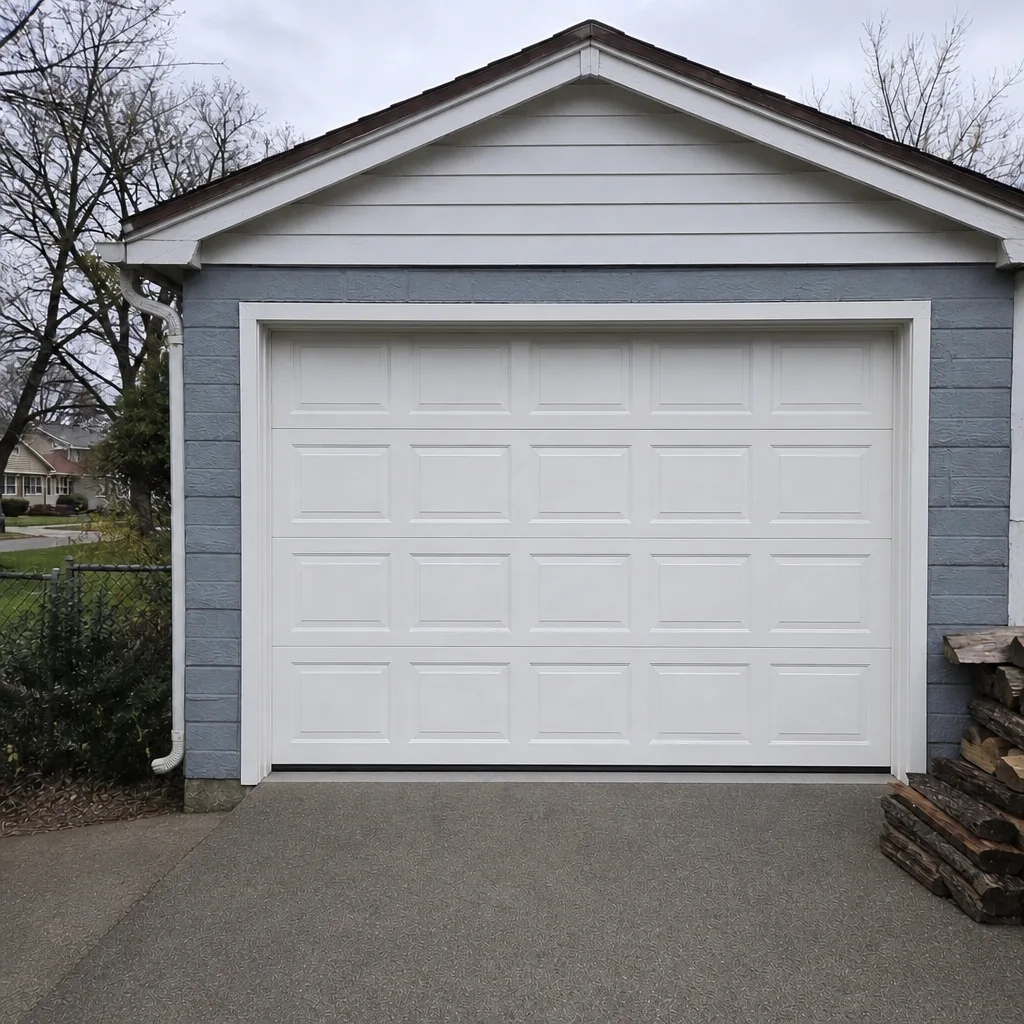
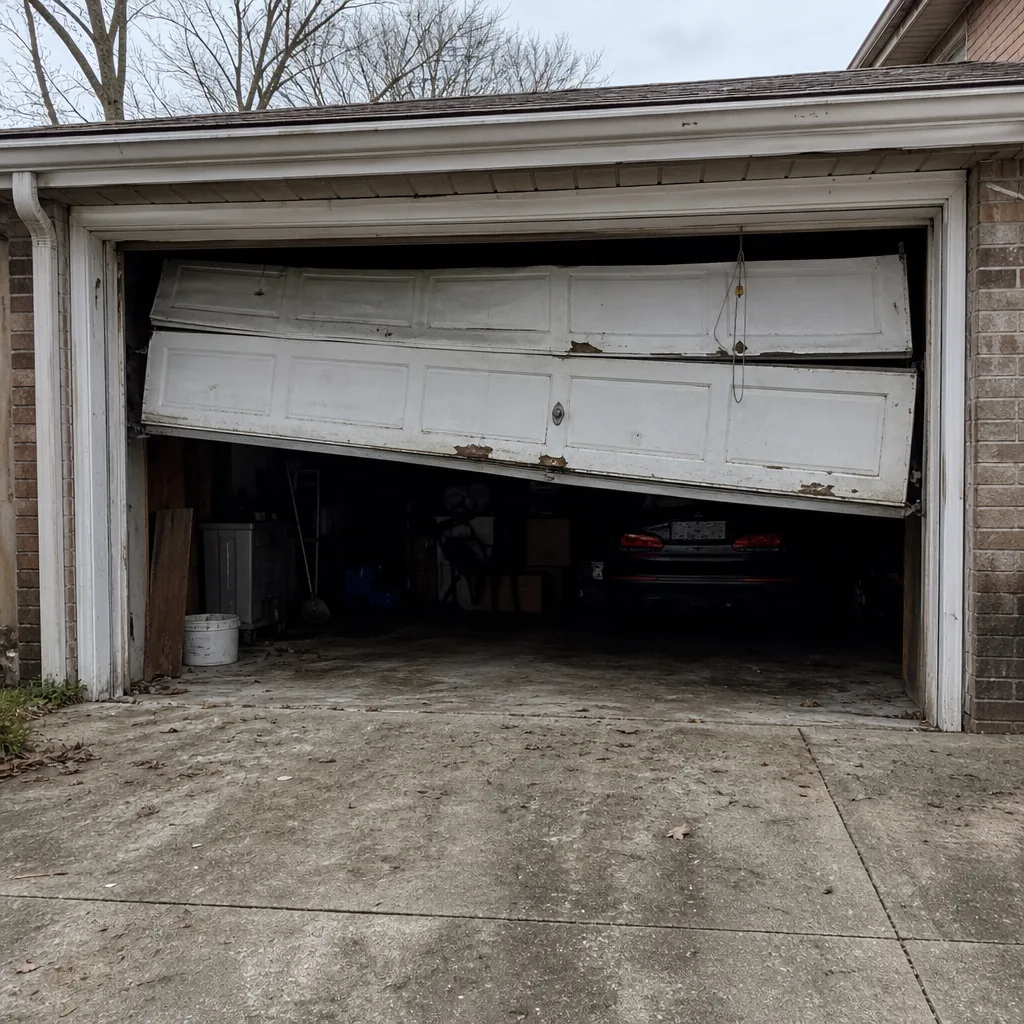
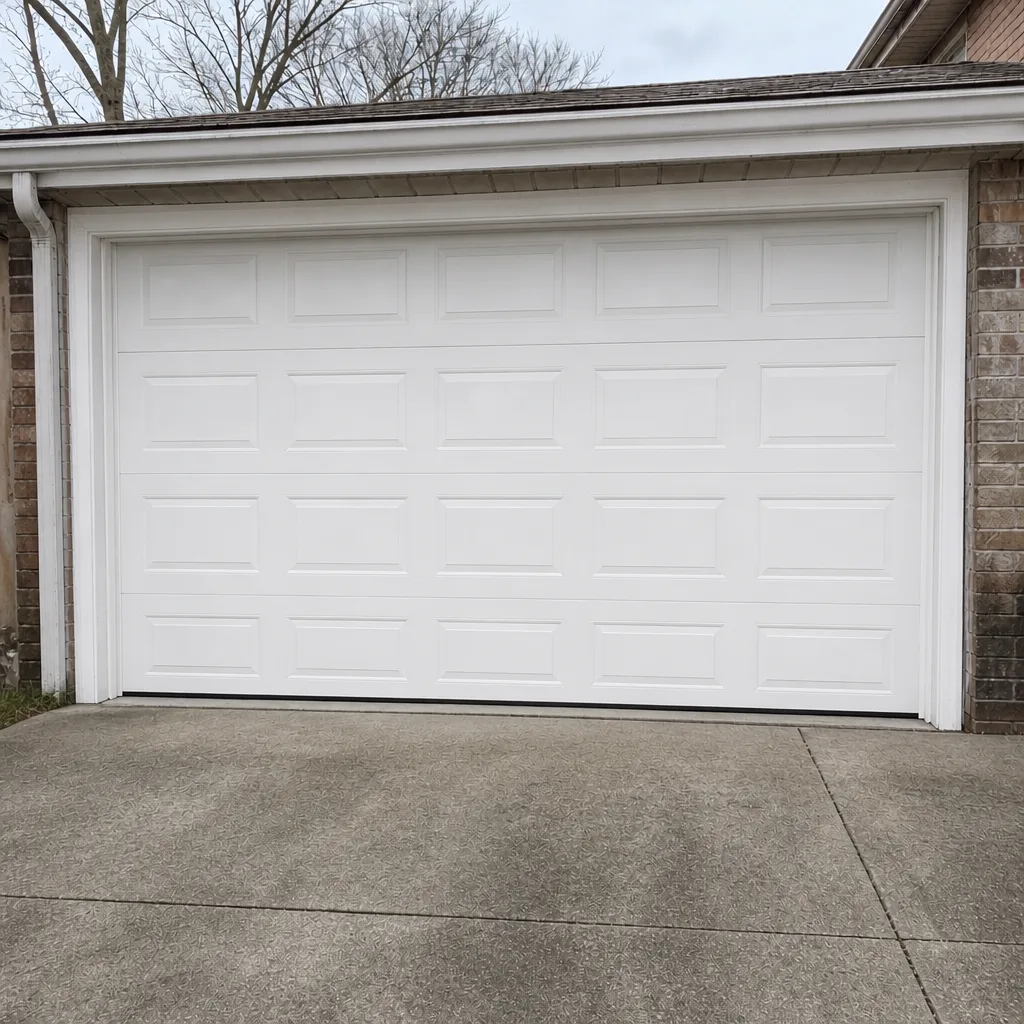
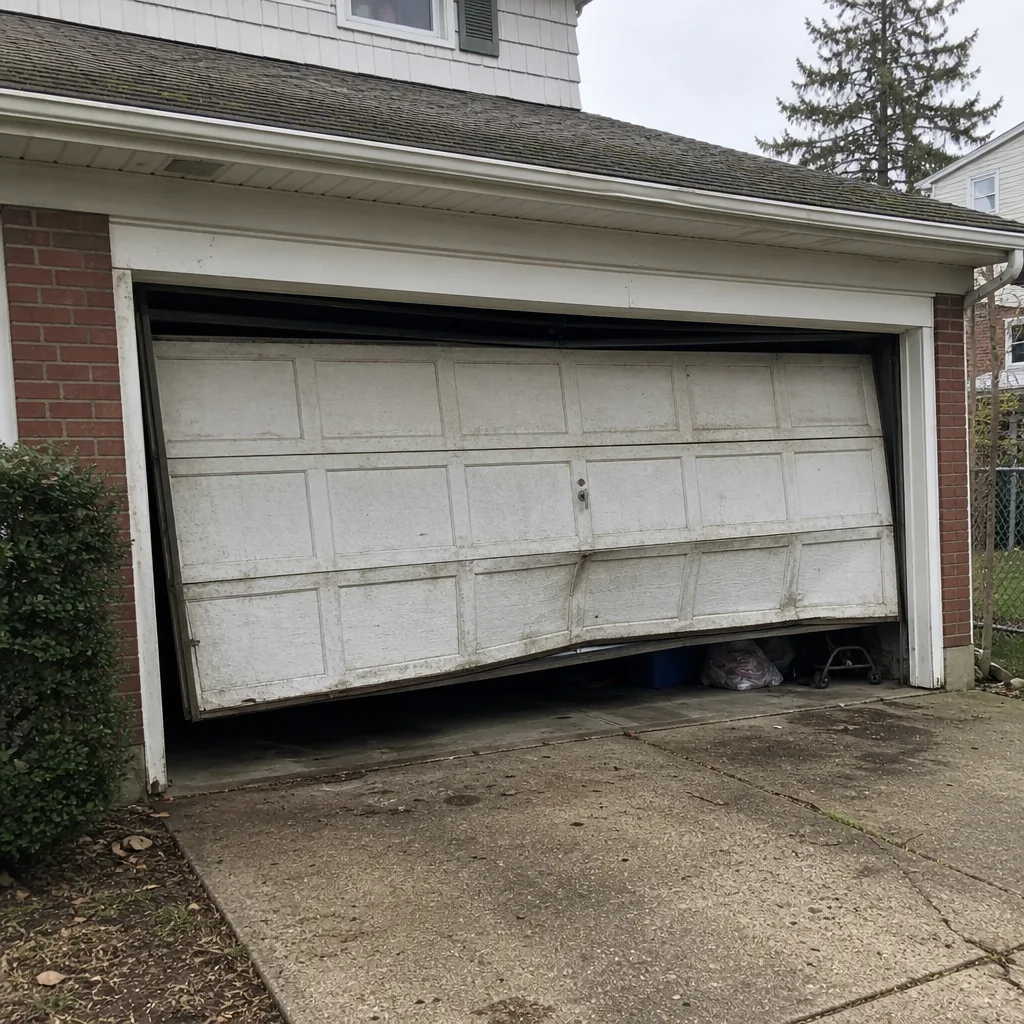
See the difference
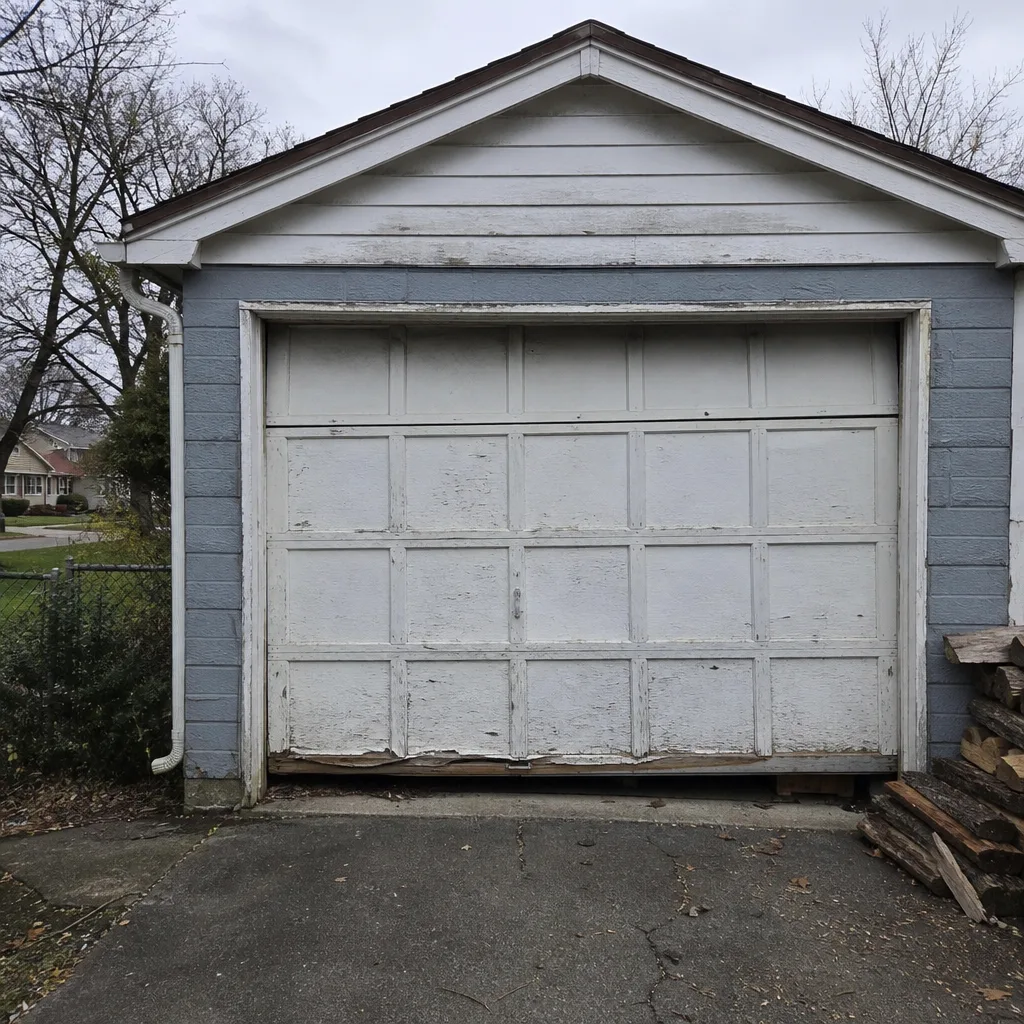 Before
 After
 Before
 After
 Before
 After
When to Call a Professional
Call a professional the moment you see a snapped spring, a slack cable, a door that’s off its track, or one that moves unevenly side to side. Those are the stop-today signs, and they’re not worth a weekend of worry. Call for a scheduled visit if you’re hearing grinding or squealing that’s getting worse, if the door hesitates or reverses on its own, or if you’ve spotted rust on the springs or a gap at the floor that’s recently appeared. Our technicians are single-trade specialists, trained on LiftMaster, Chamberlain, Genie, Clopay, and other major brands, and our spring repair work is one of the most safety-critical jobs we do. Garage Door Repair Bedford Park offers free estimates in Bedford Park – call (866) 850-5634. We answer 24/7. Fast dispatch from 7am to 7pm, Sunday through Friday. The price is quoted and agreed before any work begins, so you know the number before anyone picks up a tool.
Frequently Asked Questions
The most common warning signs are grinding or squealing, uneven movement, a door that reverses unexpectedly, rust on the springs, and an uneven gap at the floor. Any sound that’s new or getting worse is worth a call. Call (866) 850-5634 for a free estimate.
Spring repair is priced per spring, and a matched pair is usually replaced together at roughly twice the single-spring cost. Because the price depends on the door and the spring size, we give a written estimate after looking at the door. Call (866) 850-5634 for an exact quote – estimates are free.
Yes. A door stuck open, stuck closed, or off its track is exactly the kind of call we prioritize. We answer 24/7, and a call outside dispatch hours is booked into the next opening, Sunday through Friday, 7am to 7pm. Call (866) 850-5634.
No. The price is quoted and agreed before any work starts, and the written estimate sets the final number. If a technician finds a separate issue once the door is open, they’ll explain it and give you a new estimate before touching anything. Call (866) 850-5634 to book a visit.
The local pro who comes out is licensed and insured as state law requires, and our technicians have up to 11 years of experience with the brands on your door. Call (866) 850-5634 to schedule.
Treat a rusty, worn spring as a stop-using-the-door signal, even if it hasn’t snapped yet. Springs fail suddenly, so leave the door closed and call a technician rather than running it “one more time.” Call (866) 850-5634 for a same-day evaluation.
The Bottom Line
Your garage door tells you what’s about to break long before it does. The grinding that shows up on cold Bedford Park mornings, the door that hesitates, the rust on the springs, the uneven gap at the floor – each one points to a specific part and a specific fix. Reading those signs early means you’re scheduling a repair at a time that works for you, not calling from a driveway with a car trapped inside. Our advice is simple: listen once a month, look at the springs and the floor gap, and treat the load-bearing parts under tension as off-limits for DIY. When a sign shows up, a specialist who knows the brand on your door can turn that description into a diagnosis and a written estimate. Spring repair done right the first time is always the cheaper route.
Written by the team at Garage Door Repair Bedford Park.